
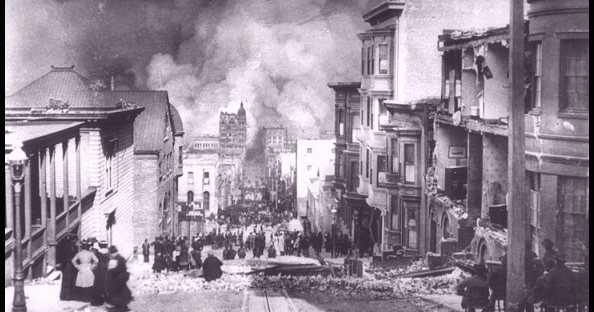
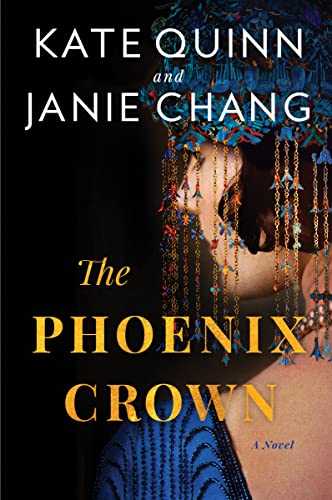
The Phoenix Crown takes place in 1906 San Francisco in the events leading up to, during, and after the famous earthquake. Gemma Garland is an opera singer trying to start her life over in San Francisco, but the artist friend she moved out to live with has mysteriously disappeared. Suling Feng lives in Chinatown and ventures outside dressed as a boy to avoid unwanted male attention. Suling also has a talent for embroidery and takes on jobs to stash enough money away to leave SF to avoid an arranged marriage to a man nearly three times her age.
The lives of Gemma and Suling collide at a mansion known as the Octagon House on wealthy Nob Hill, more specifically around the affluent and business-savvy (through perhaps unsavory means) owner Henry Thorton; Suling for her embroidery work and as a type of ornament with other Chinese women for his parties, and Gemma through her quick association with Thorton when he discovers her as SF’s next big opera singer. Through Gemma, he seeks to position him as a great patron of the arts. I found myself more interested in and sympathetic to Suling’s story, rather than Gemma’s. While Gemma wants to achieve her dream as a famous opera singer on her own, she also knowingly enagages in an affair with Thorton which raises her station. We’re told she is interested in Thorton beyond his power and wealth, but we’re not really shown that. Gemma’s backstory is hinted at but never fully explained in detail–we know she’s been burned in the past. That said, she is really not a nice or particularly likeable person for much of the book.
The pacing in The Phoenix Crown is a little odd in that what you’d think as the main event, the earthquake, actually happens around 60% into the book. The earthquake and subsequent fire scenes make up a rather small portion of the book. The rest of the story reads as a bit of a disjointed denouement or prolonged epilogue, repositioning the story of how Suling, Gemma, and the other women they befriend rebuild their lives and discover the resurfacing of Henry Thorton in society.
I’ve never read anything by Janie Chang, but I assume she wrote the Suling chapters which I seemed to enjoy the most. I usually love Kate Quinn, and I know she probably took a lot of her own experience as a trained opera singer for Gemma, but I just did not find Gemma likeable or compelling enough for me to be totally engrossed in her narrative as I have with characters in Quinn’s other books.
 Home
Home 