

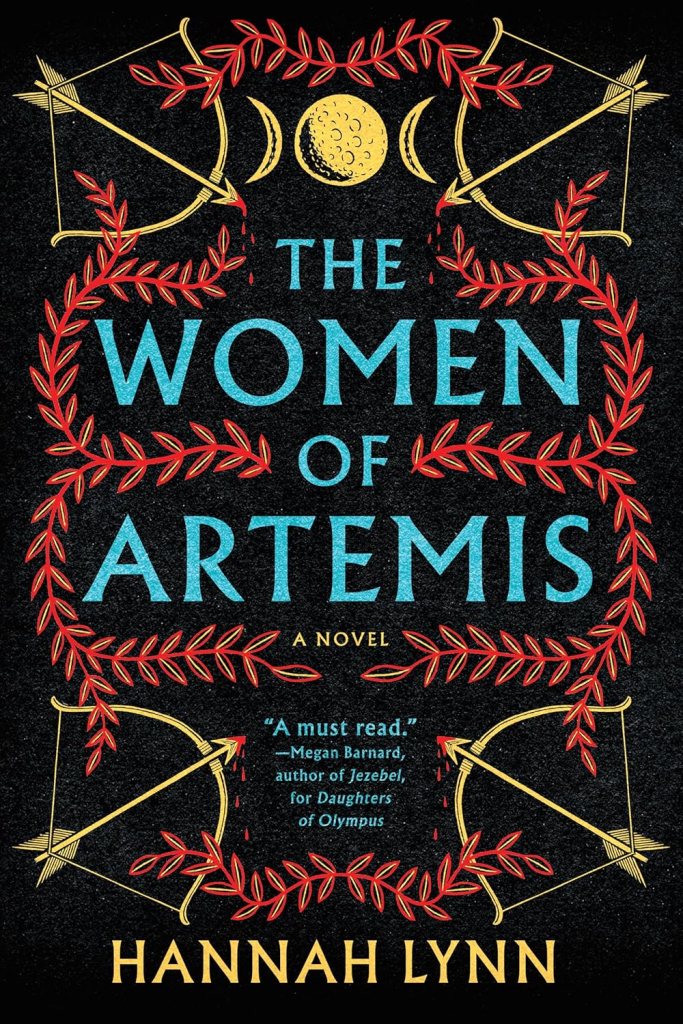
In the vein of Claire Heywood and Jennifer Saint, Hannah Lynn’s Grecian women retold books re-imagine Greek mythology and legend from the perspective of the women central to, or little mentioned in, these classic tales. The Women of Artemis opens with Otrera as she and her abusive husband move to a new town. Otrera soon finds her situation is common among the village women, but she and the others find solace, independence, and empowerment through local tannery owner Phile and her (non toxic) husband. Abuse of all kinds from husbands to wives is pervasive here, the situation coming to a head when Otrera, having been trained in archery and combat but Phile’s husband, hatches a plan for the village women to kill their husbands. At the same time, the village women form bonds with a wild horse herd–Otrera choosing the ebon patriarch she names Erebus.
As the village women band together in uprising, they soon form their own women-only community that in time draws more women from similar past abusive relationships. Otrera, known in legend as the first queen of the Amazons and the founder of Themiscyra, leads her women in battle by the blessings of both Artemis and Ares.
While I appreciated the framing of the Amazons being founded by a community of abuse survivors, I found the pacing of The Women of Artemis to be uneven. At times, the story progresses naturally while at others it drags. What’s more, there are so many side characters that beyond maybe two or three, I didn’t really know or have a clear pictures of the others. They were just names on a page without defining characteristics. I understand Otrera leads and is surrounded by many women, but the story could have been better served with a closely knit core group with unique characteristics and traits. What’s more, Otrera herself has a great motive for breaking out of abuse and leading others to freedom, but she almost too easily and too fast picks up archery, combat, horseback riding, etc. without much failure in those ventures. While her cause is just and admirable, Otrera is at times arrogant. What’s more, the author inserting motherhood and having children as one of the most important things a woman can do seemed very contrary to the initial messaging and theme of the book in terms of personal freedom and breaking out of social convention. The point of motherhood and having children is moved center stage when Otrera accepts a proposal from Ares to have children after Otrera previously had trouble conceiving. This whole theme turned me off, as not all women want children or view motherhood as the most important thing in life.
 Home
Home 