
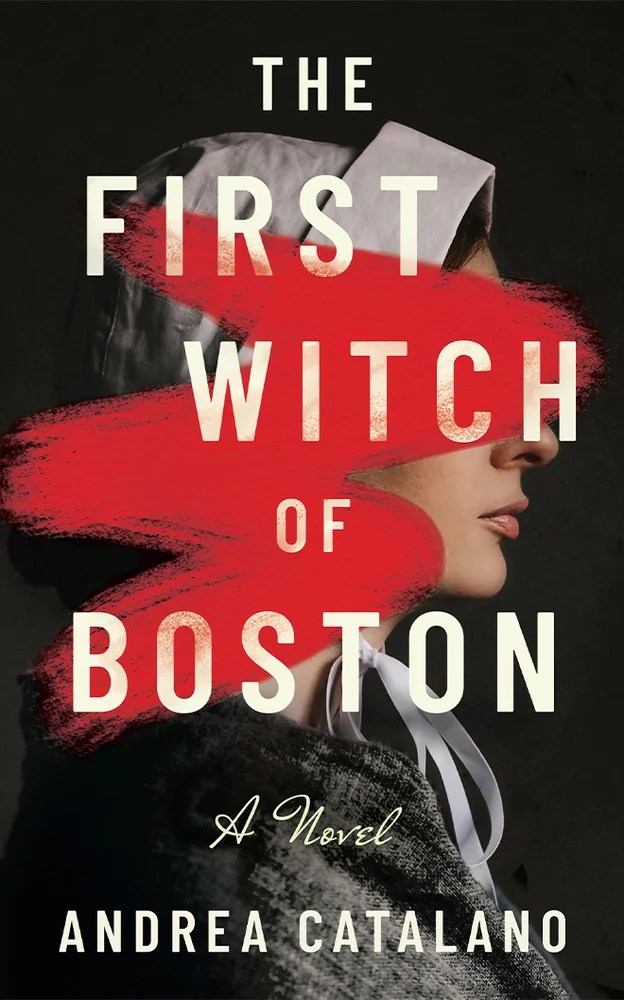
The First Witch of Boston by Andrea Catalano (who I coincidentally once shared a cab with at a writing conference!) breathes life into real historical figure, Margaret “Maggie” Jones, who was the first woman to be tried and executed for witchcraft in Boston in 1648. The author note states how Catalano was adverse (and rightfully so) to the market trend of writing about a woman associated with a famous man*, and instead sought to write a story from the POV of a man associated with a famous woman. In this case, Margaret’s husband Thomas.
Thomas finds Margaret’s diary after her execution, his reading of the events in her own words leading the framed story into Margaret’s truth. The First Witch of Boston follows similar story lines and aspects of witch accusation books such as The Witching Tide by Margaret Meyer and The Manningtree Witches by AK Blakemore. First Witch straddles the line between the real life “cunning women” (knowledge of herblore and midwifery) and Maggie’s innate, unexplainable intuitive abilities. Even her husband, Thomas, cannot explain how or why Maggie knows certain things. Another point that sets Maggie apart from the Puritan culture is her fiery and outspoken nature. While I obviously don’t disagree with Maggie clapping back to her naysayers, I sometimes found her flagrant outspoken nature to be too anachronistic which in itself became distracting at times. Of course there were women in history who spoke their minds, but largely within the context of their time. Thomas chides Maggie for her outspoken nature, and at times the way he treats her and thinks about her didn’t sit right with me, but he is after all a man of his time–if not more lenient than most in the 17th century. Both Margaret and Thomas seem to put each other on pedestals at times, which also did not sit right with me–especially considering what happens between Thomas and the conniving widow Hallett.
I’ve read many witch accusation stories and they generally follow the same trajectory, with First Witch being no exception This isn’t a bad thing, as I will no doubt continue to read witch stories because I personally find the topic fascinating. That said, as a general point in fiction I am not a fan of rape story lines and/or rape being a major plot point(s). A TW comes with First Witch for this topic. I do not believe the rape plot points were absolutely necessary to this narrative, as I think the story could have achieved what it set out to say and do without them.
*i.e. the countless book titles along the lines of “The ___’s wife”, “The ____’s daughter”, etc.
 Home
Home 