
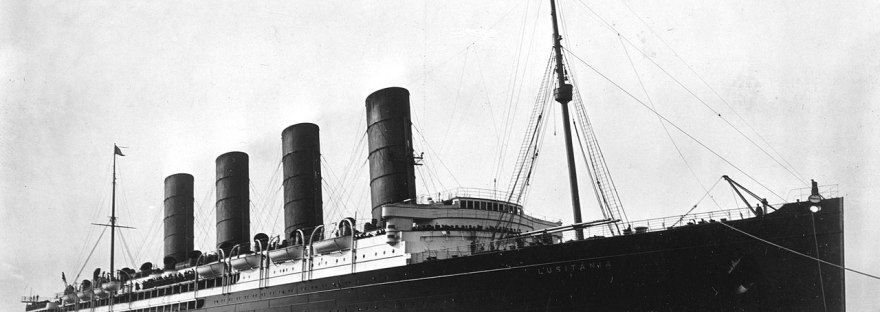
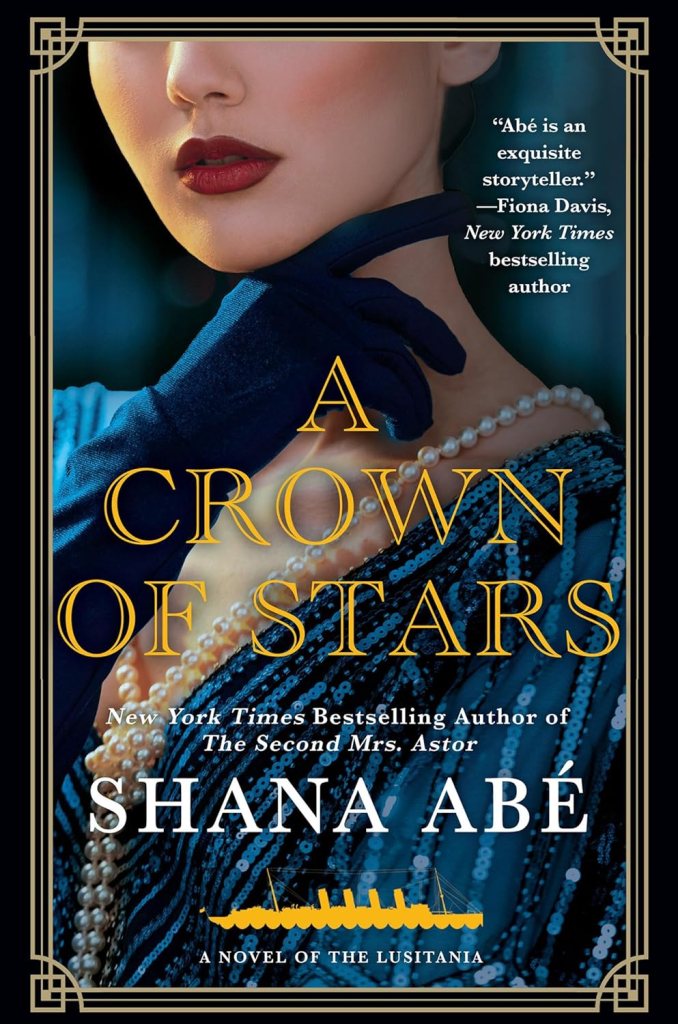
A Crown of Stars by Shana Abe follows real life historical figure, actress Rita Jolivet, from her budding acting career to her eventual survival of the torpedoing of the RMS Lusitania. Abe opens the novel in the early 1900s where Marguerite “Rita” and her younger sister Inez pursue their careers as an actress and violinist, respectively, in London. The Jolivets are descended from French aristocracy, Rita’s grandmother having been the only family member to avoid the guillotine.
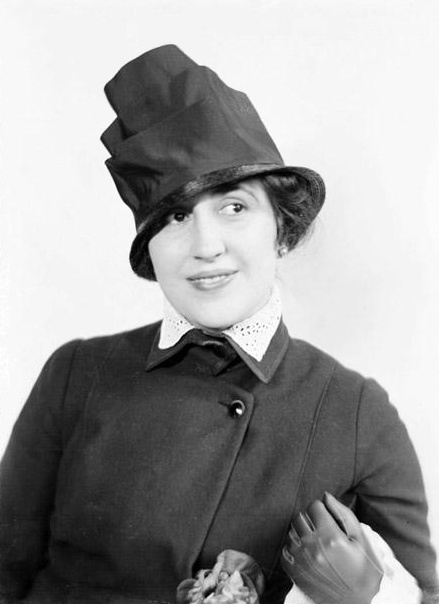
Eventually moving to New York City, Rita and Inez’s careers flourish. Inez meets and marries singer George Vernon while Rita is taken under the professional mentorship of theatre producer Charles Frohman. While Inez is fully committed to married life, Rita focuses on her career despite her suitors–namely Italian Count Giuseppe de Cippio, for whom Rita works in Italy.
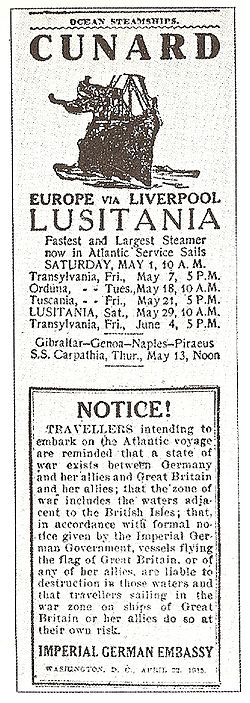
When WWI breaks out, Rita and Inez’s brother Alfred (fun fact, Alfred is the great-grandfather of Finn Wolfhard!) joins up, Rita is still in New York while Inez in already in England. Rita rushes home to say goodbye to Alfred despite the dangers of passenger ships facing potential torpedoing by German U-Boats. Abe notes a real life warning in the paper from the German Embassy, which Rita reads and decides to chance anyway.
Soon after boarding the Lusitania, Rita runs into her colleague Charles Frohman and her brother-in-law George Vernon. George, suspected to be working for the government, immediately makes a “just in case” plan of what to do if the ship gets torpedoed. The 65-70% mark of the book encompasses Rita’s experience aboard the Lusitania from boarding to survival. The sinking was fast, only about 18 minutes, and Abe aptly captures those frenetic and chaotic 18 minutes which will put readers in the mind of the sinking of the Titanic. Throughout the traumatic ordeal, Rita’s strength and determination shines through. In reality, and covered in the book, Rita went on to produce and star in her own film, Lest We Forget, about the Lusitania as part memorial, part propaganda film, The film arguably had a hand in swaying public opinion for the US to join WWI. Abe explores Rita’s emotions as she relives her life’s most traumatic experience in filming the movie–but she did so to honor the memory of those lost. I would encourage readers to read more on Rita and her sister Inez, who met a tragic end.
I felt that the first maybe 15-20% of the book wasn’t completely necessary as it covered the teen years of Rita and Inez and seemed to slow the action of the real meat of the book. The point at which Rita boards the Lusitania onward were the most engaging chapters by far.
 Home
Home 