

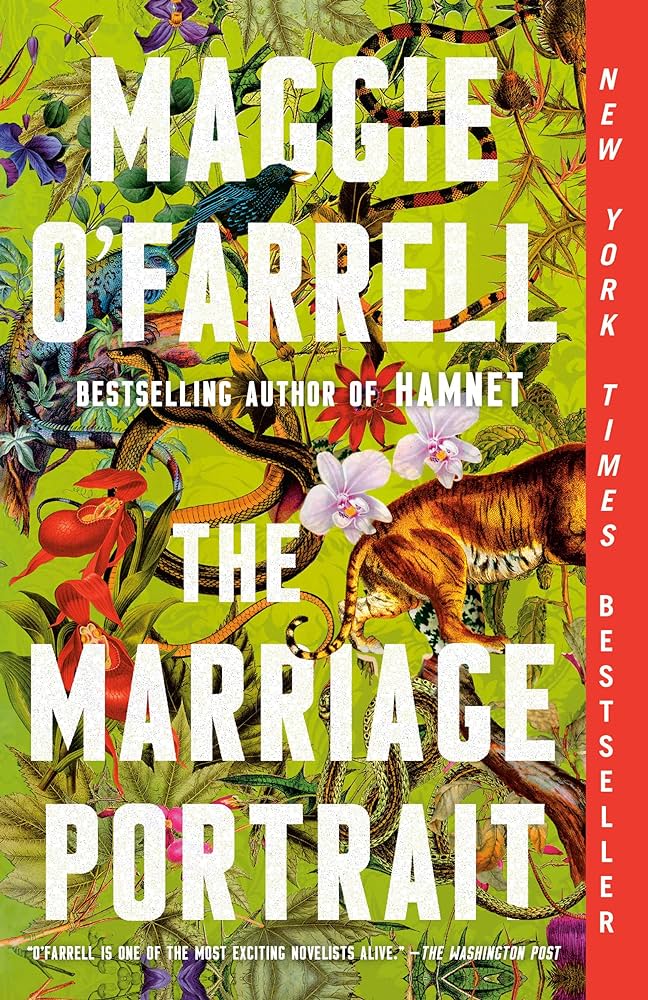
The Marriage Portrait by Maggie O’ Farrell tells the tale of the brief, tenuous life of Lucrezia de’ Medici, Duchess of Ferrara, who mysteriously died at the age of 16. After the sudden death of her betrothed older sister, Lucrezia is pushed into the role of replacement bride for Alfonso de’ Este, Duke of Ferrera, who is twelve years her senior. In The Marriage Portrait, they marry when Lucrezia is fourteen, but in reality she was only thirteen.
Lucrezia is the youngest child of Cosimo and Eleanora, different from the rest of the Medici children in not just looks but also mind. Lucrezia is curious, intelligent, precocious, and creative from a very early age. She has a keen interest in drawing and painting, as well as the natural world–specifically animals. She is fascinated by the exotic animals caged beneath her father’s palace in Florence, perhaps knowing that she will one day be little more than a pretty, caged animal.
Like many women throughout history, Lucrezia is forced into a marriage for political reasons. She is a bargaining chip of men. Her husband, the powerful and cunning Alfonso keeps a chilling distance from Lucrezia, keeping her in the dark about virtually everything in his life and family. Lucrezia is accustomed to being kept abreast of such situations, and expects it in her marriage as she had grown up seeing Cosimo keep Eleanor in the loop of all political and business dealings.
Alfonso plays his role of dutiful husband at the start, but through silent, subtle threats and a backing of immense power, Lucrezia begins to see a very different and dark picture of her husband. We read from Lucrezia’s perspective, so we never truly know Alfonso’s plans and motives for his actions. We can only assume he will stop at nothing to secure an heir. When Lucrezia pushes back about anything, even the on the benign, she is swiftly silenced and infantalized by her husband. Their marriage unfolds in a dark way as Lucrezia sits for a portrait and through this, befriends the artist apprentices. The narrative switches time periods that draw closer toward the end of the book, which at times left this reader a bit temporally and logistically confused.
Maggie O’ Farrell gives readers a hopeful, alternate outcome for Lucrezia, which makes the reality of her life and its end all the more heartbreaking.

 Home
Home 