
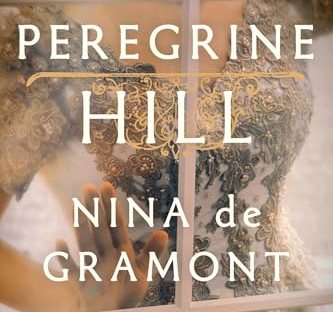

Peregrine Hill by Nina de Gramont takes place in Gilded Age New York and follows Mariah Bishop and her mother Isabelle in the wake of a family tragedy. When Isabelle’s husband and children (other than Mariah) perish in a steamboat accident, mother and daughter must find a way to survive by making an advantageous marriage. Isabelle identifies wealthy John Whitten as a candidate for herself, but is blindsided when he instead selects 18-year-old Mariah as his bride. De Gramont mentions in the author’s note that she based Mariah on her own ancestor who, as a teenager, had to marry a man in his 50s.
Mariah is moved to Whitten’s ostentatious home, Peregrine Hill, where she must contend with performing wifely duties to ensure financial sustainability for herself, her mother, and her grandmother. Her one outlet, however, is writing. And here is where the narrative becomes a bit meta and continues to do so as Mariah forms a friendship with her maid, Hetty, who is a natural editor (her father is writer.) Hetty encourages Mariah to pursue her writing and the two agree to enter a creative partnership, under a pseudonym, and submit their stories to Harpers.
Meanwhile, Isabelle is adrift as a widow living in a home without her children. With no vocation or hobby, Isabelle’s grief compels her to make some strange, irresponsible, and frankly infuriating choices. Readers will no doubt sympathize with Mariah not only over her mother’s hurtful actions, but also in the life and pretense she must uphold like the countless women throughout history.
Fans of HBO’s Gilded Age will enjoy Peregrine Hill, which departs from the show’s soapiness in favor of substance by way of delving deeper into characters and defying expectations. Peregrine Hill, unlike other stories set during this time, is not a romance. On the contrary, Peregrine Hill is very much about women standing on their own two feet, carving their own paths, and accepting the relationships that are the healthiest and most realistic for them. In the case of Mariah, her friendship with Hetty is the actual heart and core of this story, and their life choices. When they cannot rely on men, as women were expected to do at this period, they rely on each other and themselves.

