

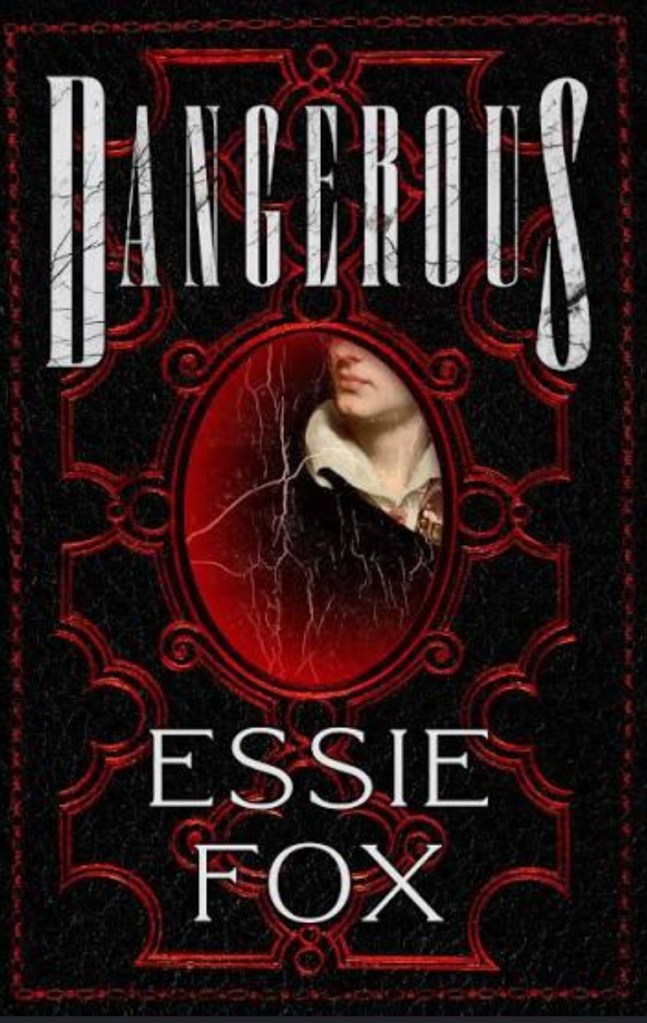
At HNS 2026, I had the pleasure of meeting and chatting with Essie Fox. I read The Fascination when it first came out and enjoyed Essie’s dark and gothic aesthetic and writing style. As such, Dangerous and her newest novel, Catherine – a Wuthering Heights retelling, have been on my TBR since they came out. I picked up Dangerous at the HNS 2026 conference and Essie was kind enough to sign it for me. During her panel, she spoke about the inspiration for this novel stemming from 1) her desire to write a vampire story, but not quite knowing how to create a narrative that hadn’t already been explored in other tales, and 2) the fact (which I didn’t know) that Lord Byron’s grave was uncovered in the 1930s to expose that his body had really not deteriorated after 100 years–which then bred rumors of vampirism. What’s more, Byron was present at the famous summer retreat where Shelley wrote Frankenstein and he began writing a story called The Vampyre. However, Byron discarded the beginnings of this story only for his personal doctor, John Polidori, to pick it up and re-work it into his own version also titled The Vampyre.
These historical threads culminate into Dangerous, where the reader finds Byron in self-exile in Venice following a string of scandals and affairs. Polidori, no longer in Byron’s employ, is also in Venice and is often mistaken for Byron. Much to Byron’s annoyance, people keep thinking he is the real author of The Vampyre, as well as the author of salacious crimes in Venice. In his exile, Byron lives in a villa with his youngest daughter Allegra while severing old affairs and dashing headfirst into new ones. But the trail of broken hearts eventually leads back to his door when he is accused of a string of crimes, endures several cases of mistaken identity, and grapples with the abduction of his daughter.
I had known a little about Byron going into Dangerous, but in reading the novel, I found myself looking up the real history several times. Byron’s “exploits” and “conquests” are infamous, and Essie Fox takes care in navigating these sometimes problematic situations. Byron is both an anti-hero and hero, but he owns his flaws and scandalous ways. On one hand, the reader wants Byron to succeed in clearing his name and reputation, but on the other hand, the reader fully understands those scorned wishing to exact revenge upon him. Fox captures the essence of Byron and the period, simultaneously filled with delicate beauty and dangerous grit.
Essie Fox explained at the panel I attended that she initially wanted to create a Lord Byron series, so time will tell if she decides to tell more of his famous exploits!

