

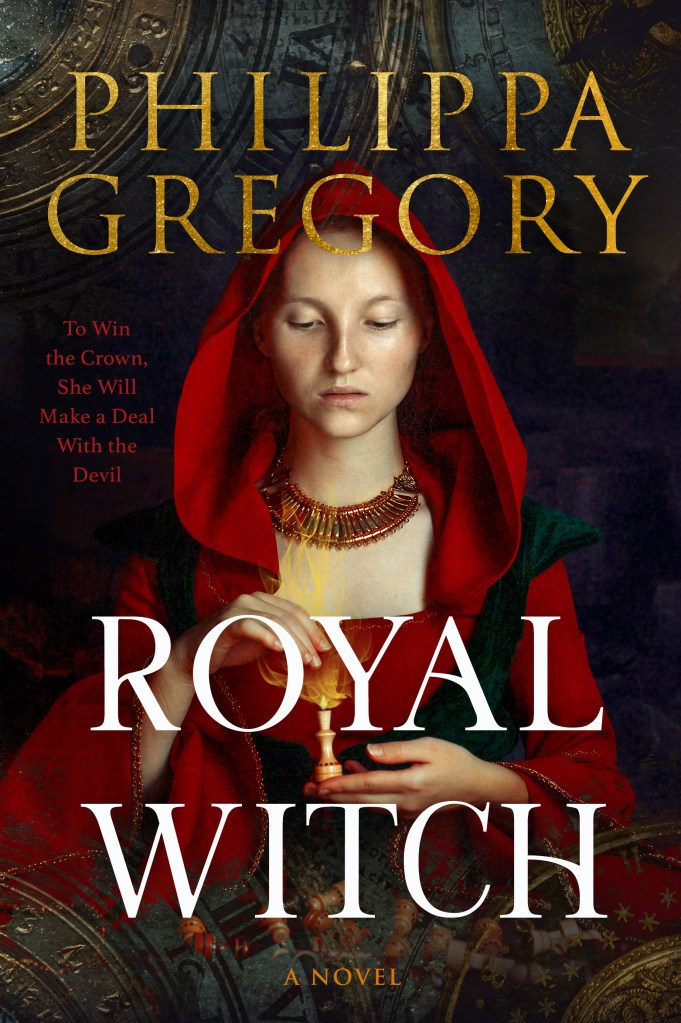
Philippa Gregory’s newest installment of British royal history follows Eleanor Cobham in the court of Henry V. I was not familiar with Eleanor before this book, but I have read enough Philippa Gregory to know I was in for a treat both entertaining and historically illuminating. Eleanor did not come from a particularly wealthy family. While her parents wished for her to go into a convent, Eleanor desired more for her life. She becomes lady-in-waiting to Jacqueline, Countess of Hainaut and first wife to Humphrey, the Duke of Gloucester. Ignorant to the ways of court and politics, as well as gender politics, Eleanor arrives believing that the only way for a woman to come up in the world is to marry well. She operates under a facade of girlish naivety to essentially infantalize herself in order to attract a nobleman at court wishing to “rescue a maiden” in a very chivalrous manner. However, Eleanor soon learns from both Jacqueline’s example and her overt views, that woman can and should fight their own battles, can own their own land and wealth, and can achieve power and respect on their own merit. Were it not for Jacqueline’s strong influence, the person Eleanor becomes may have been very different.
Another pivotal meeting in Eleanor’s life is with Owen Tudor (who for most of the novel is not yet the patriarch of the Tudor dynasty.) They form a swift and passionate connection, and where Eleanor once believed she would never find a husband, she soon begins to allow herself to believe in the very real possibility of marrying Owen. She is blind-sided, however, when he marries Henry V’s widow, Catherine of Valois. All his declarations of love and sweet promises go up in flame with this betrayal. The reader acutely feels Eleanor’s anger and scorched earth mentality against Owen and Catherine. She closes off her heart and becomes as cold, manipulative, and ruthless as she once thought Jacqueline. Fueled by her anger, Eleanor marries newly available Humphrey and makes frequent visits to the “court witch” Margery Jourdemay to read her cards and divine the future. The reader cannot help but feel Eleanor’s hatred against Owen, yet at the same time, Gregory slowly makes Eleanor into an unlikeable character akin to Cersei Lannister in the ASOIAF series. After Owen’s betrayal, the novel shifts tonally to a story from the perspective of the villain.
There aren’t a lot of likeable or sympathetic characters throughout Royal Witch, save perhaps Margery Jourdemay, for whom the novel is, I assume, partially named. We don’t see a lot of Margery, and from what we do see, we get the impression she is simply used as a pawn in the political machinations at court. The title of this book might feel misleading to some, as I had anticipated a novel from the perspective of someone like Margery (I didn’t know about her before this book!) However, Eleanor Cobham is such a complex and compelling character (who you also want to punch) that readers will likely stay engaged.
Royal Witch will be released October 20, 2026

