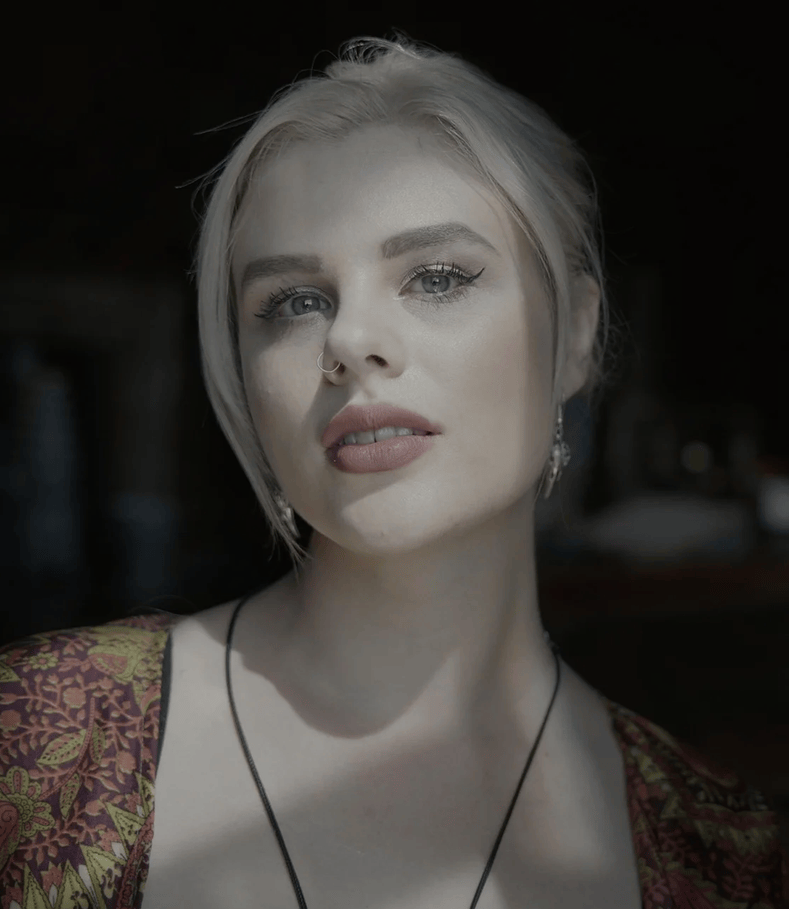
Rozina Hyland is a gothic historical fiction writer originally from Norfolk and now based in the Midlands, UK.Her fascination with all things gothic began at an early age, and she has always been drawn to the darker things in life. Through her writing, Rozina explores women’s history and themes of power, persecution, and survival.As a dyslexic and autistic author, Rozina is passionate about sharing her experiences and wants to show there isn’t just one way to become a writer.
NL: Of Her Blood releases October 20th. What was the timeline of conceiving the idea to publication?
RH: So, when I came up with the idea, it felt like a combination of factors coming together. I am very much a pantser. I had a beginning, middle and end in mind. I knew what I wanted to say with the book, the message behind it, but the story itself was all pretty vague. My first draft took me around three months to complete and it was a very rough first draft! There was little sense of time in the book, some of the minor characters lacked any depth and there were just so many plotholes! But, it was a great base to work with and I knew I could mould it into something amazing. In the second draft I did some serious developmental editing. I wrote an entire character out and brought someone back from the dead. This draft was where all the heavy-lifting was done and when that was finished it was much closer to the story I have today. The book went through around nine drafts in total and the whole process from start to finish took nearly a year and a half.
NL: Can you speak to your pre-publication experience? For example, did you have years of slogging through submissions to agents for the traditional publishing route, or did you decide from the beginning that you wanted to self-publish?
RH: I spent a couple of months in the trenches, sending out submissions and got some full manuscript requests but they didn’t go beyond that. I also got an offer of publication from a small press, but in the end I decided indie was my best way forward. I found the submission process incredibly difficult. It wasn’t the rejections I found challenging, it was crafting all the emails and trying to work out all the unspoken rules of the publishing industry. I have dyslexia and when it comes to what I like to call ‘’admin writing” my brain malfunctions! I was so paranoid about leaving a typo, or saying the wrong thing in the personalisation that it left me questioning every single detail! I spent those few months in a state of anxiety, I’d wake up in the night with my head spinning. In the end, I knew for my mental health it was best to take matters into my own hands, plus, I’m a control freak so knowing I would have full control of the book after feeling so out of control was a big factor too.
NL: How do you feel about the stigma around self-publishing in the industry and how do you navigate it?
RH: I must say, I think it’s getting better. I have seen so much positivity towards indie writers online and I think that people are starting to realise that indie authors are just as talented, just as dedicated as traditionally published authors. I try not to allow it to affect me. I had an experience recently where I was talking to a shop owner about my book and when I said it was indie she almost recoiled! But that’s unfortunately going to happen sometimes. The way I deal with it is by thinking of all the amazing, positive things I’ve heard from my advanced readers and how people I don’t even know are excited to read the words that I have written. That is a truly wonderful feeling.
NL: As a fellow self-publisher, I know first-hand that we have to be our own team doing everything. Did you outsource any of those pieces in terms of hiring a cover artist, typesetter, marketing company, etc.? Or did you truly do everything?
RH: I am extremely lucky that I am a designer in the day, so in terms of cover layout, typography, etc, the book cover was something I was able to put together on my own. Though I dabble in art, I knew I didn’t have the skill or the talent to execute the vision I had in my mind, so I spent ages searching for someone who could do the style of art I wanted and I found someone who looked perfect. They also provided a time-lapse of the process, which was important for me since I’ve heard so many stories of cover artists falsely claiming they don’t use AI, when they do! I hired an editor in various phases of my journey. Their feedback along with beta readers was invaluable and really helped me grow as a writer. I also hired a proof-reader. I don’t know how many times I had gone through the final manuscript, but I needed reassurance that I hadn’t missed anything. My dyslexia gives me a constant fear that I’ve missed something glaringly obvious so I knew that would put my mind at ease. But even with me going through it ten million times and a proof-reader, the odd thing still slipped through! A lovely reader from the ARC team messaged to say she’d spotted a typo and I was so grateful that I was able to update it before the release.
NL: Everyone always says not to judge a book by its cover–but people do! I always find cover art to be very important in conveying the quality, vibe, and emotion of a book. How did the cover art concept come about and what did you wish to convey with it?
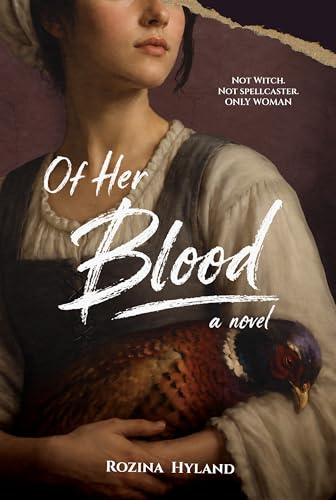
RH: When I knew I wanted to go indie, I took myself out to bookshops to look at book covers from authors whose vibes I wanted to emulate. I also spent a lot of evenings on Pinterest, creating board after board of ideas. When it came to the subject of the art, I went through a few different ideas, but I knew I wanted my main character, Tilda, as the focus, but I didn’t want to show her face. I think there is something a little magical about knowing everyone who reads the book will have their own version of her in their head and I didn’t want to influence that with anything other than the writing. I went through the book and tried to think which scene would make a powerful image.I briefed the artist and wanted a full portrait to play with. I tried different crop points on the image and different styles of typography until it all clicked! I’m over the moon with the final cover.
NL: What drew you to the subject matter of Of Her Blood? Were there certain historical facts that wouldn’t leave you alone, or was it more of the psychological and sociological aspects that ignited your creativity to tell this story?
RH: It’s very interesting, there wasn’t just one thing, there were a lot of moving parts. First and foremost, that period in time is a period I’ve always connected with. I’ve always had people tell me I have “witchy vibes” sometimes as a compliment, maybe other times not so much! But it made me wonder why that was. My style and clothing play a part, but I think it’s more than that. I’ve often been told I am hard to read and difficult to understand—that can sometimes unnerve people! I’m pretty sure that is down to my autism and even when I try to mask, I still struggle to fit in. My experiences led me to wonder if this could have been a reason why women in the 16th and 17th century were accused of witchcraft. Many of the cases I had heard about described the women as quiet, solitary, or odd. We will never know for certain if some of these women were neurodiverse, but there have been many modern theories supporting this. This thought helped form the story, and with neurodivergence often being genetic, it gave me the prose of the book being the story of a daughter whose mother may have struggled with the same things. Another big factor was that I felt the witch trials and the misogyny that surrounded them is something that is becoming eerily familiar. The more I researched, the more I saw striking historical parallels. From the scaremongering by the church and leaders, to the silencing of anyone, particularly women, who dared to speak up or not conform. The book, though it could be classed as witch lit, has no magic. That was something I knew from the start was important because it encourages conversations about why these things happened, and the reality is, it wasn’t because of anything supernatural.
NL: I felt such authenticity in Tilda’s struggles with her sexuality, as well as her challenges with gender roles at the time–especially in marriage. Did you pull any of Tilda’s experiences from your own life?
RH: This was another factor in the melting pot of reasons as to why I wrote the book. My sexuality isn’t something I’ve spoken about much, but it’s something I have been processing and figuring out for a very long time. As a teenager I always wondered if I was bisexual but had only had romantic relationships with men, despite having physical experiences with both men and women. So, for a long time I was able to almost ignore my attraction to women. By the time I was in my late twenties I had experienced feelings for both men and women, but still wasn’t sure as to how I identified. Bisexual seemed the best way to describe it, but it never quite fit. It wasn’t until I met my husband that I felt comfortable enough with myself to explore who I truly am. He is a wonderful person and being so loved by him allowed me to feel safe and secure in my own body and mind in a way I have never been before. As my life became stable, things became more clear. I realised that gender is not an important factor in who it is that I love—it’s the person. The book has been such a therapeutic project for me and many of these thoughts and feelings have influenced the book and in particular, Tilda.
NL: What was your research process like for OHB? Did you take any interesting research “field trips”?
RH: As a family we do a lot of history based activities, national trusts, museums etc, so I would always keep a keen eye out to see if there was anything relevant to the book on our family days out. A really great source of inspiration was an exhibition in Moyes Hall, Bury St Edmunds. There was information and accounts of women accused of witchcraft around the same time the book is set. If it’s a subject you’re interested in, I would definitely recommend a trip!
NL: What is your “day job” and how does it inform or impact your writing, if at all, and/or how do you stay disciplined to balance writing with said “day job”?
RH: I am a product designer. I used to be a graphic designer which is where I picked up skills that were handy for the book cover! It can be very hard to balance writing with working as well as being a mother. There are times where I am too burnt out with work or life admin, and writing has to take a back seat. I’ve realised it’s important to allow that to happen and try not to feel too guilty about it. I am also someone who thrives when I am in a routine so, if I am in a slump, I will aim to make it part of the daily routine. Write a little on my lunch break, every other weeknight in the evening, it’s amazing what a little bit here and there can add up to! In complete contrast to that I have also done big chunks of my writing in mad bursts! The last 16,000 words of my first draft I wrote in three days whilst my husband and daughter went to visit my mother in law. Overall, I think the most important thing is not to feel bad when you don’t write, because you will always come back to it when you’re well rested or inspired.
NL: What would you like people to keep in mind while reading OHB, and/or what would you like them to take away from it?
RH: I don’t feel that people should have any particular thoughts going in. As much as I wrote the book with all of the things I’ve spoken about in mind, they are all just contributing factors. What is important to me is that people enjoy and get lost in it for a little while. Tilda’s mind and sexuality are things that contribute to her character, they are not story, just part of who she is. I think you could read the book and maybe not even pick up on Tilda’s neurodiversity. There wasn’t knowledge around these subjects at that time and the way she sees the world is woven into the wider story as a whole. I have had several advanced readers contact me and tell me how much they connected with Tilda and her experiences. If Of Her Blood can make people feel that way and allow them to reflect, I’ll be more than happy.
NL: And now for a fun question…If a director were to make a film of OHB, who would you pick? Would you want to adapt the story into a screenplay yourself? Or would you not want to be involved at all?
RH: I’ve thought about this waaaaay more than I should have! I think Greta Gerwig would be awesome. Everything she does is just pure gold. In my dreamland where Greta reads this book, says “I must make this a film” and asks me for the rights, I would definitely like to be involved. As I said before, I’m a control freak! I do sometimes feel for writers who lose control over their work. It must be difficult to hand over your characters and worlds and leave how they are then represented in someone else’s hands entirely.That being said, I think the book has a very cinematic energy and would adapt well to screen, so it is one of my biggest dreams!
NL: What already published book do you wish you’d written?
RH: Weyward! I think it’s the perfect book. The generation stories, the accessible but beautiful way it is written, and the messaging behind it. I think it’s the book my mind travels back to the most.
NL: What are you working on next (if you are at liberty to say)?
RH: I am in very early stages of a WIP set in the Victorian era. It explores themes of addiction and toxic family relationships (another light read haha). With all the work going into releasing Of Her Blood, it’s been very slow. I’m only 35,000 words in and I started on it over half a year ago. I am looking forward to putting my energy back into it once the book is released. I also have another idea that keeps popping up but I am incapable of working on more than one story at a time!
Thank you!


1 thought on “Interviews with Indies: Rozina Hyland”
Comments are closed.